Friday, 1 May 2015

Thursday, 30 April 2015
Critical Evaluation - Word Count 1335
The final film involves quite a lot of uncanny content. Firstly the abandoned nature of the doctor's office set relates to uncanniness as it gives the reminds one of the past. The office is shown as abandoned using, tattered wallpaper, rocks coming through the walls, growth of nature and a lot of dust. However, the office is still in fairly good shape, giving the viewer an idea as to how it looked or maybe worked when it was running, this eerie, almost nostalgic feeling is the main uncanny element of the set. Another way that the uncanny is represented is with the use of meat in jars. The meat relates to abjection (Kristeva) as it almost gives a living quality to the inanimate experiments that have taken place in the office. I think that the edit, unfortunately does not highlight the uncanny element of these experiments as well is could have done, but I think it comes across fairly well. The Geisha's head is another big uncanny element within the film. The head mounted on the wall, is still for the most part of the film, this relates to Jentsch's theory of the uncanny as the viewer does not know if it is alive or dead, a lot like Najjar's Bionic Angels. In the end the head comes a live letting out a piercing scream. This also relates again to Jentsch's theory of the uncanny, as the Geisha is just a head, therefore an inanimate object with living qualities.
I feel the film works well in creating the uncanny element. The use of the close cinematography creates a sense of claustrophobia which I feel works really well with the abandoned nature of the set. The close ups of certain parts of the set, for example the rocks poking through the walls and the plants growing, really allow the viewer to view the set as a whole, I feel this is more effective than showing the set in a wide angle. I think that the set is what make the film successful, a lot of effort and thought has gone into the creation of the abandoned nature of the set. For example, the sandpapered wallpaper glossed with tea and green paint, the dusty cabinets, the paper rocks poking through the walls and the plants growing all work together to make the set work. One problem we had was with the nature of DSLR cinematography having a shallow focal range. This created problems in the post production stage as when trying to do the green screen effects in After Effects, a blur effect had to be added to Geisha image when the background was out of focus, this wasn't ideal but I think it worked okay, it just felt strange at times. Another slight issue he had was with the lighting of the green screen within the set. The green screen element from the green screen studio works pretty well considering we used a 2D background image, lighting effects were used in After Effects to create a more 3D feel about the background, however if we were to do this again, we would film in a cave for the background image to create a more realistic feeling about the cave.
Another minor problem we had was that we nailed the on-set green screen to the set behind the 'window frame', this caused shadow on the green screen, causing problems again at the post production stage, looking back we should have nailed it to the front of the 'window frame' to stop shadows being formed on the screen. Another problem with the set is that, when we filmed the 'entry cupboard' being opened a bit of behind the set was in shot, this wasn't massively noticeable however; if we were to do this again we would include another green screen behind the set to allow another cave background to be put onto the image.
My contribution to the project mainly consisted of the design and creation of the set. I also acted in the film, however I don't think this added much to the film as it didn't involve anything complex. I brought a lot of props to the set, which added a lot of the uncanny elements within the cabinets. A lot of the painting and wallpapering of the set was done by me which was part of the success of the film. On the day of the first shoot I helped with the lighting of the set which I believe created an eerie atmosphere as there were a lot of shadows created. Although I didn't contribute much to the post production element of the film, I feel I helped towards the final result by helping choose the backgrounds for the green screen scene with the cave and suggesting that we use a blur filter in certain shots to make the green screen element within the set look out of focus when the foreground was in focus. I also believe I helped construct a number of the shots within the shoots, by suggesting what we might need for coverage and what needed to be in shot at times, for example, in the shot when I climbed through the cabinet, I suggested that we hung the heart monitor papers over the cabinet instead of getting a separate shot of those, which might have disrupted the flow of the film.
My learning on this module has been extensive, it has ranged from the basics of after effects to a basic knowledge of woodwork. Firstly learning about the uncanny and the different ways of creating uncanny has been very interesting and worthwhile. This has been supported by a lot of guided research in to different art forms such as fine art, film and sound art and into psychological theories such as Freud and Jentsch. I feel my practical skills have been enhanced a lot on this module too, the woodwork workshops were greatly useful even as a refresher into basic joinery techniques. Also I have learnt a lot about creating certain effects with little money/resources. I feel that we were encouraged to be innovative with resources for example, we created a gloss for the wallpaper out of tea and green paint, which I think was very successful. I also feel that we were encouraged to be 'weird' in the design elements of our sets which also showed, mainly with the jars and bottles that we filled with different products; from kidneys, to coffee and vodka, to create visually interesting props and to create uncanny elements for the set. Although I didn't do any After Effects work for the final project I feel that I learnt a good amount of skills in that area. I learnt the capabilities of After Effects and how they can be used. I learnt how to green screen with film and how to do it properly and how to get the lighting right without shadows.
Overall, on this module my learning has greatly advanced by the mistakes made and how we overcame them and how we retrospectively looked at these mistakes in way of coming up with solutions afterwards. On the module I learnt a great deal of useful skills, particularly in the way of After Effects, not only did this give me a basic knowledge of the programme, it also gave me an idea about what sorts of things to do when setting up for a green screen shoot, such as avoiding shadows, a lot of camera movements and using a lens with a short focal range. The main thing that I would change if taking this module again though is, I would use a 3D background image for the green screening element to give the film a more realistic feel. I feel happy with the final result of this module and the vast learning that has taken place for me, I feel I have broadened my horizons of art during the research stage and throughout the design and making stages of the set building.
Tuesday, 3 March 2015
Simone Racheli


Simone Racheli is a fine artist who's main body of work involves every day items sculpted to look as if it's made of meat. Meat gives the work a 'live' element and relates to abjection which will "explore themes that transgress and threaten our sense of cleanliness and propriety particularly referencing the body and bodily functions," (Tate) These elements create a sense of the uncanny in the work.
Unheimlich (Art Exhibition) Curated by Matt Roberts
https://www.youtube.com/watch?v=EjD5B564kXo&feature=related
This exhibition includes a great selection of various art forms all relating to the uncanny.


This exhibition includes a great selection of various art forms all relating to the uncanny.
Friday, 27 February 2015
Set

The set is now finished. We didn't quite have enough wallpaper to fill the walls so we had to paint a small section grey to fit with the general colour scheme.
Monday, 23 February 2015
Set Construction: Week Two
- Finished painting gaps
- Put up green screen behind window space
- Made human-sized hole behind where the small cupboard will stand
- Covered the glass windows on the cabinet with old worn paper to prevent reflections of the studio
- Added more tea to the walls
- Made old looking scrolls using tea


Set Construction: Week One
- Put up 3 set flats, in an L shape
- Stripped Original wallpaper
- Pasted our wallpaper on to all sides
- Painted the gaps grey
- Made 'paper rocks' in rips of the wallpaper
- Painted the window frame brown
- Covered the wallpaper in tea mixed with green paint to create a worn effect


Friday, 20 February 2015
Abandoned Places
In the past I have visited a number of abandoned buildings places, I get a thrill from exploring them and discovering the ways in which they used to work and exist. I feel that they represent an element of the uncanny as (in whole) they are how they were in the past only a little rougher around the edges and taken over by nature and explorers. Hopefully our set, the abandoned doctor's office, will recreate this feeling. Here are some photographs I have taken in abandoned places:


Ski Village
Cannon Brewery
Saturday, 14 February 2015
Ron Mueck


Ron Mueck is a hyperrealistic sculptor. His sculptures are made to be uncomfortably realistic in shape, colour, texture etc. however, they are all over-sized, this creates further uncomfort and creepiness. You wouldn't normally see a baby twice the size of a full grown adult, the hyperreality of the scupltures confuses the brain (cognitive dissonance) and creates a sense of uncanny.
Tuesday, 10 February 2015
Doctor's office
After a meeting with the group we decided on a set that took aspects from our ideas. We decided on building an abandoned, victorian doctor's office. We will try and create a mouldy-looking, dingy office that is being taken over by nature. On one wall will be a mounted Geisha head. There will also be two cabinets, one containing jars and vases full of strange experiments and pickled body parts. The other will be the entry point to the office.
Un Chien Andalou (1926) Luis Bunuel & Salvador Dali
https://www.youtube.com/watch?v=BIKYF07Y4kA

Un Chien Andalou is a masterpiece of artist cinema, with many references to the uncanny.
"We may try on rationalistic grounds to deny that fears about the eye are derived from the fear of castration, and may argue that it is very natural that so precious an organ as the eye should be guarded by a proportionate dread." (Freud)
This quote highlights the uncanny for this scene in the film, making the connection that the cutting of the eye relates to castration, making it an extremely uncomfortable image without one really understanding why.
Sunday, 8 February 2015
Unheimlich (animation) Juan Manuel Escobar (2007)
https://www.youtube.com/watch?v=OGaV_6mOj_M

This animation creates a real sense of unease. The movements created are uncanny as they only vaguely represent the movements of a human being, the stop motion technique is integral in making this sense of unease. The sound in the film also adds to the sense of unease as it relates to what we see on screen i.e. a person heavily breathing as the man's chest inflates, however the sound is exaggerated greatly adding to the uncanny feel of the film.
This animation creates a real sense of unease. The movements created are uncanny as they only vaguely represent the movements of a human being, the stop motion technique is integral in making this sense of unease. The sound in the film also adds to the sense of unease as it relates to what we see on screen i.e. a person heavily breathing as the man's chest inflates, however the sound is exaggerated greatly adding to the uncanny feel of the film.
Thursday, 5 February 2015

Wednesday, 4 February 2015
Leif Podhajsky
I am a great admirer of Leif Podhajsky's artworks, especially his work involving symmetry. I feel that his work targets the hyperreality of landscape and the beauty of wildlife to create uncanny images using mirroring techniques to create symmetry and 'infinite' landscapes.

Northern Borders (2013) I feel that this artwork creates a sense of uncanny as Podhajsky has taken an image and used symmetry to create something unreal, but recognisable.

Innerspeaker (2010) Uncanniness has been created here using repetition of imagery to create an infinite effect landscape.

In Ghostlike Fading (2012) Symmetry has been used here to create a 'super-landscape' it is instantly recognisable as clouds but the symmetry creates a strange feeling and a certain beauty.
Northern Borders (2013) I feel that this artwork creates a sense of uncanny as Podhajsky has taken an image and used symmetry to create something unreal, but recognisable.

Innerspeaker (2010) Uncanniness has been created here using repetition of imagery to create an infinite effect landscape.
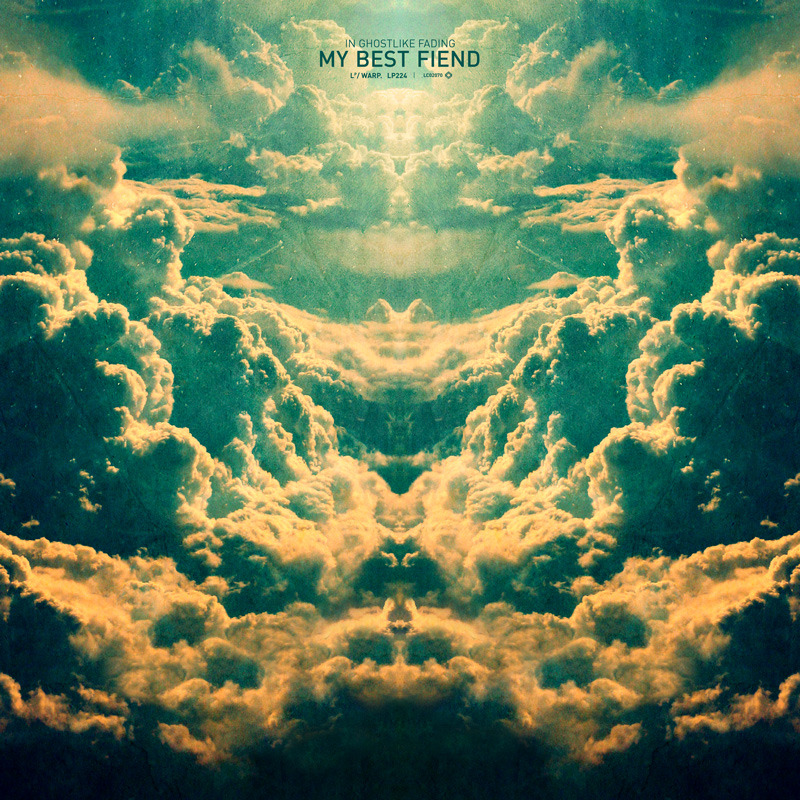
In Ghostlike Fading (2012) Symmetry has been used here to create a 'super-landscape' it is instantly recognisable as clouds but the symmetry creates a strange feeling and a certain beauty.
Tuesday, 3 February 2015
Symmetry
During a visit to the Dali exhibition in Berlin, I noticed a series of paintings that seemed uncanny, I couldn't work out why I found them so odd. After a while I noticed that they were symmetrical with certain, minimal aspects unsymmetrical. I would like to make a set with this in mind. The presence of symmetry would be a large aspect of the set, I would like to use shadow and fluid shapes to create the uncanniness and to disrupt the symmetry of the set.
Monday, 2 February 2015
First Session
In the first session we looked at the uncanny in film. This short creates a sense of claustrophobia and un-comfort. It does this by using a recognisable figure (the human) and creating a strange sense of motion using the stop-motion animation. This is uncanny and uncomfortable. We also looked at a sequence from Andrei Tarkovsky's Mirror, where a similar thing is done, we see a human washing her hair in an incredibly, un-human way, her movements are strange and create a sense of unrest.
Subscribe to:
Posts (Atom)